
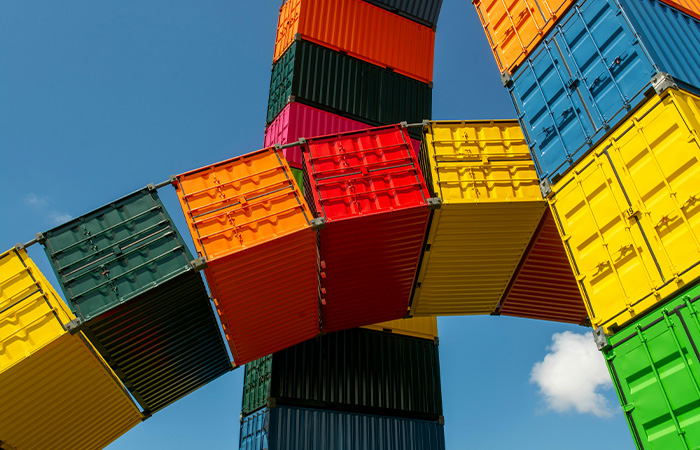
Thinking of owning one, building with one, or just curious? Get information on shipping containers right here with us!
In this article, we cover everything from their Corten steel walls to the CSC Plate, providing a seven point 360 degrees understanding about the mighty steel boxes that keep global trade moving.
What are Shipping Containers?
You see those huge metal boxes stacked up at the port in Mombasa or gliding effortlessly behind a truck on the highway? Those, my friend, are shipping containers, and honestly, they’re the absolute backbone of global trade. They’re more than just big metal boxes; they’re the silent MVPs that made the world a true “global village.”
Before these standardized steel giants arrived, cargo handling was a complete mess; a whole affair of inefficiency, damage, and loss.
But thanks to the visionary Malcolm McLean, the containerization process changed the game, drastically cutting costs and transit times.
Nowadays, their importance and efficiency is simply indispensable to the global supply chain.
Ready to dive deep? Here are 7 essential factors you need to know about the shipping containers that power our world.
1. Shipping Container Types & Dimensions: It’s Not Just One Size, Right?
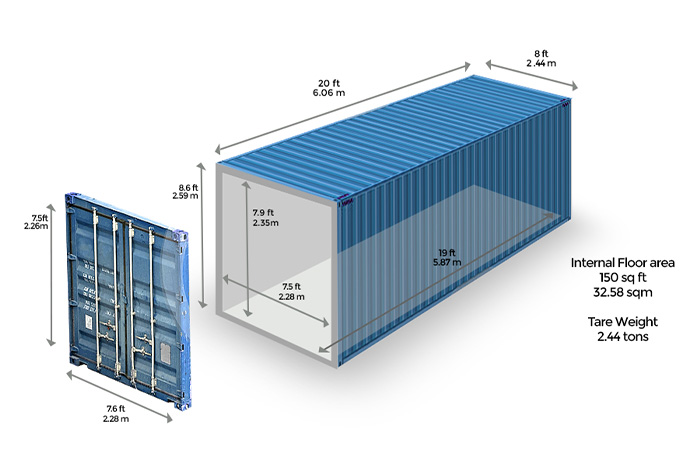
Not all containers are built the same; they come in different ‘flavors’ to handle all kinds of cargo and activity.
The most common sizes are the 20-foot or Twenty-foot Equivalent Unit (TEU) and the 40-foot or Forty-foot Equivalent Unit (FEU).
| Container Dimensions | 20ft Container | 40ft Container |
| Container Length | External: 20ft or 6.06m | External: 40ft or 12.19m |
| Internal: 19.55ft or 5.87m | Internal: 39.37ft or 12.00m | |
| Container Width | External: 8ft or 2.44m | External: 8ft or 2.44m |
| Internal: 7.64ft or 2.33m | Internal: 7.64ft or 2.33m | |
| Container Height | Standard Height: 8.6ft or 2.59m | Standard Height: 8.6ft or 2.59m |
| High Cube: 9.6ft or 2.89m | High Cube: 9.6ft or 2.89m |
Table showing different dimensions for shipping containers
In the world today, most 40-foot Containers come in the High-Cube height dimension of 9 feet 6 inches high. Even so, standard 20-foot and 40-foot containers are typically 8 feet wide and 8 feet 6 inches high.
But for special goods, you need special tools, which are listed below:
| Type of Container | Common Features and Use |
| Refrigerated Containers (Reefers) | These are like mobile fridges—essential for temperature-sensitive goods such as fresh fruits and vegetables from the farm, high-value pharmaceuticals, or certain chemicals. No issue with spoiling here! |
| Open-Top Containers | Got some tall machinery or cargo that needs to be loaded by crane from above? The roof on this one is a removable tarpaulin, making loading easy and straightforward. |
| Flat Rack Containers | Perfect for oversized or awkward cargo such as massive pipes or vehicles. They either have collapsible or no sides at all. |
| Tank Containers | Stainless steel tanks framed to mimic standard containers, specifically used to safely transport liquids, gases, or powders. |
| “One-Trip” vs. Used Containers | “One-trip” are basically brand new, used for a single journey. Used ones are bought and sold based on their condition, from cargo-worthy (ready to ship) to just good for storage. |
2. The CSC Plate: Your Container’s ‘Passport’
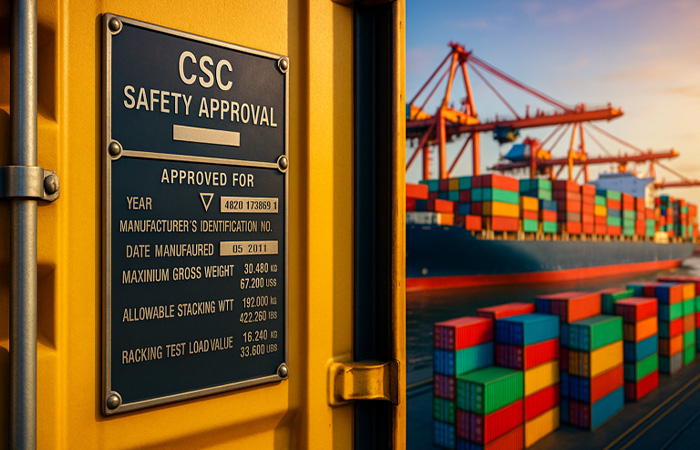
Every single shipping container must have a valid CSC (Container Safety Convention) plate; think of this as an international passport. Fixed to the container door, this metal plate is proof that the box meets all global safety standards for structural strength and handling.
These CSC plates are provided by authorized manufacturers during container building, and by authorized surveyors or companies that perform inspections and verifications.
These companies act on behalf of the International Standardization Organization (ISO) to ensure the container meets the safety requirements of the International Convention for Safe Containers (CSC).
Examples include inspection services like Observater Surveys and Services Group and container companies like Willbox and CHS Container Group.
If a container lacks a valid CSC plate, then, it’s a no-go for international shipping and general use.
CSC Data: A Quick Analysis
This plate carries critical data for logistics and procurement managers, shipping companies and end-use container buyers:
- Maximum Gross Weight: The absolute total weight it can carry, including the container’s weight itself (the tare weight) and the cargo (payload).
- Stacking Capacity: Specifies the maximum weight of other containers that can be safely stacked on top of it without a structural defect.
- Inspection Dates: The initial inspection is valid for five years, with subsequent checks required every 30 months (2.5 years) to ensure seaworthiness.
3. Built Like a Tank: Structural Integrity
Shipping containers are built differently. They’re designed to survive the high seas and extreme weather and marine conditions.
- The Steel: They’re made from Corten steel (or “weathering steel”), a corrosion-resistant alloy that forms a protective, rust-like layer when exposed to the weather elements, preventing further damage. Talk of unimaginable toughness.
- The Shape: The corrugated walls aren’t just for looks; they provide immense, enhanced tensile strength.
- The Strength: With their reinforced corners and walls, these freight boxes can be stacked up to nine high without buckling!
- The Floor: Typically made of marine-grade plywood that is resistant to both moisture and pests. It is often made from tropical hardwood like Apitong or Keruing trees, native to Southeast Asian countries such as the Philippines, Thailand, and Vietnam.
The wood is treated with insecticides and fungicides to resist pests and decay, making it durable and strong. Alternative options sometimes include bamboo flooring.
4. The ISO Code: Global Tracking Smooth
To ensure seamless global tracking and management, every container gets a unique ISO (International Organization for Standardization) code. This alphanumeric identifier simplifies the whole logistics chain and pinpoints:
- Owner
- Equipment Category
- Serial Number
- Check Digit (for verification)
5. Shipping Security and Seals: Preventing Theft
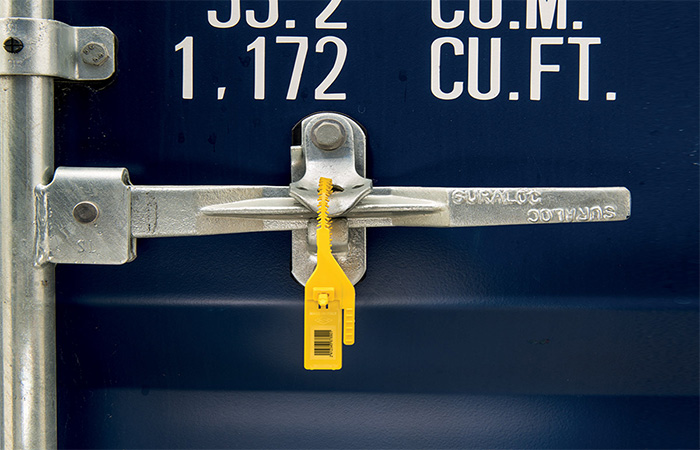
Security is paramount. Once loaded, the doors are locked with a high-security bolt seal. This seal is a tamper-evident device with its own unique ID number.
The seal’s number is documented on the shipping manifest and must be checked upon arrival. A broken seal? That’s a clear red flag that the contents may have been compromised during transit.
6. Lashing and Securing Cargo: No Shifting Allowed
The most critical thing to prevent goods from being damaged is securing them properly inside. This process, known as lashing, involves using straps, chains, and dunnage (packing material) to secure the goods to the container walls and floor tightly.
A poor job here means the cargo can shift during a rough transit, causing major damage to the goods and the container itself. You don’t want that kind of complication.
7. Repurposing: The Container’s Second Life (The Clever Factor)
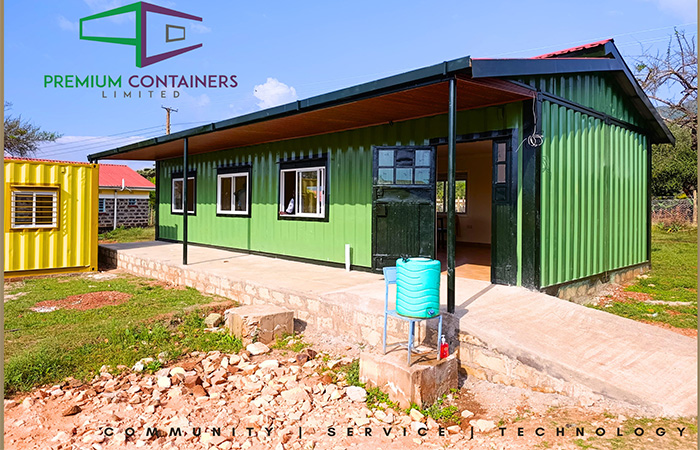
A shipping container has a long life, even after it retires from the high seas (where it typically serves for 10-15 years). But their story doesn’t end there! Due to their exceptional durability and ingenious design, they have become the go-to structures for innovative construction architecture and rapid development. They are highly useful in the fabrication of functional spaces such as:
- Modern Homes & Modular Housing: Creating stylish, affordable, and quick-to-build container homes.
- Offices & Classrooms: From construction site offices to quick-setup school classrooms.
- Containerized Medical Clinics: Providing essential, durable, and easily transportable healthcare facilities.
- Secure Storage Units: Their original purpose lives on, offering tamper-proof storage.
- Pop-Up Shops, Cafés, and more: The possibilities are endless—even swimming pools!
Need a Container? Premium Containers Can Supply and Fabricate!
If you’re in the Kenyan market for a container—whether for shipping or for a construction project—you need a reliable partner. Companies like Premium Containers specialize in the entire process:
- Supply: Helping customers obtain both new and used high-quality shipping containers.
- Delivery to Your Site: Trucks deliver the units designed with offloading cranes
- On-Site & Off-site Container Fabrication: Converting and customizing these steel boxes into the functional homes, offices, classrooms, or clinics you need.
This comprehensive service highlights the full-circle value and adaptability of the mighty steel box.
The invention of the shipping container truly revolutionized logistics, creating a standard, secure, and hyper-efficient system that connects every factory and market across the globe.
Would you like to know the current market price range for 20-foot and 40-foot shipping containers in Kenya? We are here to help.
Talk to us today!